What is rspndr.sys?
rspndr.sys is part of Microsoft® Windows® Operating System and developed by Microsoft Corporation according to the rspndr.sys version information.
rspndr.sys's description is "Link-Layer Topology Responder Driver for NDIS 6"
rspndr.sys is usually located in the 'C:\WINDOWS\system32\drivers\' folder.
None of the anti-virus scanners at VirusTotal reports anything malicious about rspndr.sys.
If you have additional information about the file, please share it with the FreeFixer users by posting a comment at the bottom of this page.
Vendor and version information [?]
The following is the available information on rspndr.sys:
| Property | Value |
|---|---|
| Product name | Microsoft® Windows® Operating System |
| Company name | Microsoft Corporation |
| File description | Link-Layer Topology Responder Driver for NDIS 6 |
| Internal name | RSPNDR.SYS |
| Original filename | RSPNDR.SYS |
| Legal copyright | © Microsoft Corporation. All rights reserved. |
| Product version | 5.1.2600.3029 |
| File version | 5.1.2600.3029 (xpsp_sp2_gdr.061107-2312) |
Here's a screenshot of the file properties when displayed by Windows Explorer:
| Product name | Microsoft® Windows® Operating System |
| Company name | Microsoft Corporation |
| File description | Link-Layer Topology Responder Driver.. |
| Internal name | RSPNDR.SYS |
| Original filename | RSPNDR.SYS |
| Legal copyright | © Microsoft Corporation. All rights.. |
| Product version | 5.1.2600.3029 |
| File version | 5.1.2600.3029 (xpsp_sp2_gdr.061107-2.. |
Digital signatures [?]
rspndr.sys is not signed.
VirusTotal report
None of the 52 anti-virus programs at VirusTotal detected the rspndr.sys file.

Folder name variants
rspndr.sys may also be located in other folders than C:\WINDOWS\system32\drivers\. The most common variants are listed below:
- C:\WINNT\system32\drivers\
- G:\WINDOWS\system32\drivers\
- C:\WINDOWS2\system32\drivers\
- D:\WINDOWS\system32\drivers\
- H:\WINDOWS\system32\drivers\
Hashes [?]
| Property | Value |
|---|---|
| MD5 | a3b23fb3f295694091f51865f98588b2 |
| SHA256 | ffeff5e8c4c73bf769f6b959498007e8d566836a28429024beb1c530af12df5a |
What will you do with rspndr.sys?
To help other users, please let us know what you will do with rspndr.sys:
What did other users do?
The poll result listed below shows what users chose to do with rspndr.sys. 31% have voted for removal. Based on votes from 13 users.
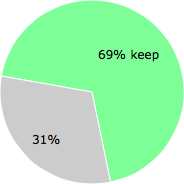
NOTE: Please do not use this poll as the only source of input to determine what you will do with rspndr.sys. Only 13 users has voted so far so it does not offer a high degree of confidence.
Malware or legitimate?
If you feel that you need more information to determine if your should keep this file or remove it, please read this guide.
And now some shameless self promotion ;)
 Hi, my name is Roger Karlsson. I've been running this website since 2006. I want to let you know about the FreeFixer program. FreeFixer is a freeware tool that analyzes your system and let you manually identify unwanted programs. Once you've identified some malware files, FreeFixer is pretty good at removing them. You can download FreeFixer here. It runs on Windows 2000/XP/2003/2008/2016/2019/Vista/7/8/8.1/10. Supports both 32- and 64-bit Windows.
If you have questions, feedback on FreeFixer or the freefixer.com website, need help analyzing FreeFixer's scan result or just want to say hello, please contact me. You can find my email address at the contact page.
Comments
Please share with the other users what you think about this file. What does this file do? Is it legitimate or something that your computer is better without? Do you know how it was installed on your system? Did you install it yourself or did it come bundled with some other software? Is it running smoothly or do you get some error message? Any information that will help to document this file is welcome. Thank you for your contributions.
I'm reading all new comments so don't hesitate to post a question about the file. If I don't have the answer perhaps another user can help you.
I have a variant in the system32, not /drivers dir. [I am running Winxp SP3]. It id's itself as a 6.1 win 7 active directory lightweight file. I renamed to .bak first, then it seems to have restored itself after a short while. Hitman Pro 3.5 id's it as a virus, rediscovered it under the .bak ext. and re-deleted it. As it restored itself now, I am doing these searches for further info regarding the file. (one hint was ics not running, and sec service disabled.) Auto updates seems to have been hikacked by this file, the call was from svchost (win updates svc) to this file running under a rundll32.
C:\WINDOWS\system32\rundll32.exe "C:\WINDOWS\system32\rspndrf.dll",nqbpjnh Command Line
The above was abstracted by Anvir Free. No obvious start entries or otherwise.
Hope this is helpful.
Ben
NMT. Inc.
# 18 Mar 2011, 11:01
ben D writes